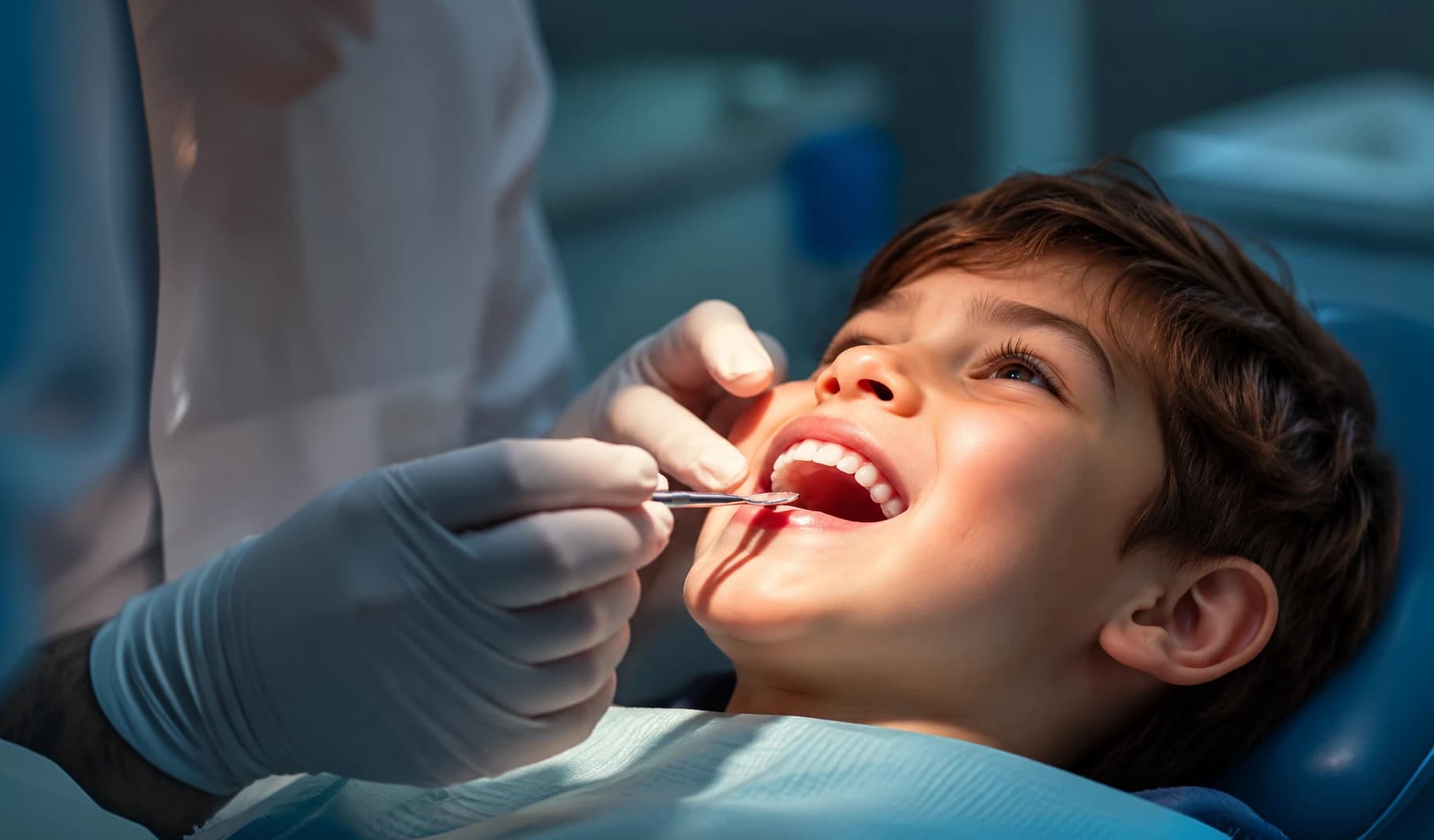
Many parents are surprised to hear that a child's first dental visit should happen long before they start school. Pediatric dental associations recommend the first visit by your child's first birthday, or within six months of the first tooth appearing, whichever comes first.
Why so early?
Baby teeth can get cavities as soon as they appear. Early decay is hard to spot at home, especially on the back teeth, and it can spread quickly in small teeth. An early visit lets us find problems before they cause pain, and gives you practical guidance while habits are still forming. At the first visit we can:
- Spot early signs of decay, often chalky white lines near the gums
- Check how teeth are coming in and how the jaws are growing
- Show you how to clean your baby's teeth and gums
- Talk about feeding, night-time bottles, sippy cups and snacks
- Answer questions about teething, thumb sucking and pacifiers
- Make the dentist a familiar, friendly place before any treatment is ever needed
What happens at the first visit?
First visits are short, gentle and relaxed. For babies and toddlers, the check is often done 'knee to knee': your child lies back on your lap, so they can see you the whole time while Dr. Sreeja looks at their teeth and gums.
We count the teeth, look for early signs of decay, check the gums, tongue and bite, and may apply fluoride varnish if your child would benefit from it. X-rays are rarely needed at this age. Most of the visit is a conversation with you about brushing, diet and what to expect as more teeth arrive.
How to prepare your child
- Book a time when your child is usually rested and fed, away from nap time
- Talk about the visit simply and positively: the dentist will count your teeth and check they're healthy
- Avoid words like hurt, pain or injection, even to reassure; they can plant worries
- Read a picture book about the dentist, or play 'dentist' at home with a toothbrush and a soft toy
- Bring any medical records and a list of medicines your child takes
After the first visit
Most children then need a check-up every six months, though we may suggest a different schedule based on your child's cavity risk. Regular, positive visits mean that if a problem does appear, it's found early and treated simply.
Already past the first birthday? It's never too late. Book a visit whenever you can and we'll start with a gentle, get-to-know-you check.
This guide is general information for parents and isn't a substitute for advice about your own child. If you're worried about your child's teeth, call or WhatsApp us.